Wednesday, June 23, 2021

Baltimore Police Chief Links Recent Crime Wave To Staff Shortages, Gang Violence

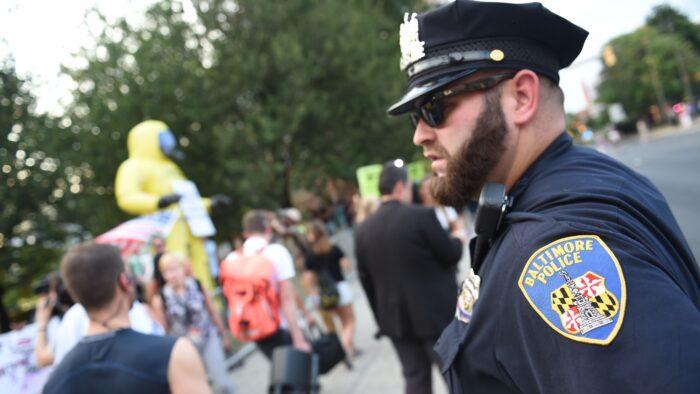
Baltimore Police Chief Links Recent Crime Wave To Staff Shortages, Gang Violence Authored by Lorenz Duchamps via The Epoch Times (emphasis ours), Baltimore Police Commissioner Michael Harrison blamed a rise in violent crime and homicides in the most populous city in Maryland on “a number of issues,” including a shortage in staff. A Baltimore police officer at a fundraising event in Baltimore, Maryland on Sept. 12, 2019. (Eric Baradat/AFP via Getty Images) Harrison noted during an interview with CNN on Tuesday that just like New York and all the other big cities across the nation, Baltimore is seeing a spike in violence, with 18 homicides recorded in just the past ten days alone. “It’s a number of issues, it’s grouping gang violence, it’s retaliation from previous bad acts,” the commissioner explained. “But we are seeing an increase in close acquaintance shootings and domestic violence shootings where people just have absolutely poor or no conflict resolution skills and are using guns to solve their conflicts.” Baltimore Police Commissioner Michael Harrison, center, Baltimore Mayor Brandon Scott, second from right, confer at the scene of a deadly shooting in Baltimore, Maryland on June 16, 2021. (Kim Hairston/The Baltimore Sun via AP) Harrison also noted that he hopes the police force in the city, which is seeing roughly 230 officers short of its current budget, will see more “boots on the ground” to fight the crime spike and homicides. “We are hiring, we are recruiting,” Harrison said. “We are using every resource available, we’re using all the time to force up and plus up the number, so we can have more officers.” While stressing the departments’ dire need for more officers, the chief also said additional personnel is not just good for improving law enforcement in the city, but also needed to “build those relationships” within the community, noting that the department needs the community’s help in solving these murders so these bad actors can be held accountable for “terrorizing our community.” The comments came as President Joe Biden plans to lay out new steps to stem a rising national tide of violent crime, with a particular focus on shootings, as administration officials brace for what they fear could be an especially turbulent summer. President Joe Biden speaks during a meeting with FEMA Administrator Deanne Criswell and Homeland Security Adviser and Deputy National Security Adviser Elizabeth Sherwood-Randall, in the Roosevelt Room of the White House in Washington on June 22, 2021. (Evan Vucci/AP Photo) In a speech on Wednesday, Biden is to unveil a series of executive orders aimed at reducing violence, and he will renew his calls for Congress to pass gun legislation, aides said. Ahead of the speech, the Justice Department announced new strike forces aimed at tackling gun trafficking in five cities. “Yes, there need to be reforms of police systems across the country. The president is a firm believer in that,” White House press secretary Jen Psaki said Tuesday. “But there are also steps he can take as president of the United States to help address and hopefully reduce that crime. A big part of that, in his view, is putting in place gun safety measures … using the bully pulpit but also using levers at his disposal as president.” The Associated Press contributed to this report. From NTD News Tyler Durden Wed, 06/23/2021 - 21:20
http://dlvr.it/S2L8wL

Is The Worst Finally Over: Automotive Chip Supply Expected To Ramp Up In Second Half Of 2021

Is The Worst Finally Over: Automotive Chip Supply Expected To Ramp Up In Second Half Of 2021 It looks like the ongoing semiconductor pain for the auto industry could finally be on the track to subsiding. That's because car chip vendors are now able to "ramp up output" thanks to more foundry house support coming online, Digitimes Asia reported overnight.  The report notes that some international automotive IC vendors have "notified their clients that they can expect more supplies in second-half 2021" as foundries expand production capacity.  For example, the report notes that "Globalfoundries has just broken ground for a 12-inch fab construction project in Singapore".  Additionally, industry sources in Taiwan told Digitimes that delivery lead times are set to be shortened substantially from the over 50 weeks they were previously at. It's the first sliver of good news for the automotive industry since the semi shortage began as a result of the pandemic. Up until this report, projections for "returns to normal" looked pessimistic and gloomy not only from the automotive industry, but also from consumer electronics companies. Recall, just two weeks ago, we noted that Flex, the world’s third-biggest electronics contract manufacturer, offered up the "gloomiest" forecast for the crisis yet. The company has more than 100 sites in 30 countries and works with major names like Dyson and HP.  Lynn Torrel, Flex’s chief procurement and supply chain officer, told FT: “With such strong demand, the expectation is mid to late-2022 depending on the commodity. Some are expecting [shortages to continue] into 2023.” Revathi Advaithi, chief executive of Flex added that the shortage has prompted the company's multinational customers to "take a far more serious look at restructuring their supply chains than the trade war between the US and China ever did". Adavaithi commented: “Most companies won’t make a decision to regionalize just on tariffs. They know it could be a short-term thing but things like the pandemic and escalation of shipping costs that impact the total cost of ownership drives regionalization.” Flex's pessimistic forecast follows that of Intel CEO Pat Gelsinger weeks ago, who we pointed out said that the shortage could last "a couple years".  We noted in mid-May that Taiwan Semiconductor had plans of "doubling down" and vastly increasing its investment for production in Arizona. The chipmaking giant said at the time it was "weighing plans to pump tens of billions of dollars more into cutting-edge chip factories in the U.S. state of Arizona than it had previously disclosed". The company had already said it was going to invest $10 billion to $12 billion in Arizona. It now appears to be mulling a more advanced 3 nanometer plant that could cost between $23 billion and $25 billion. The changes would come over the next 10 to 15 years, as the company builds out its Phoenix campus. In May we noted how automakers were being forced to leave some high tech features out of new vehicles as a result of the semi shortage. Days before that, we pointed out "thousands" of Ford trucks sitting along the highway in Kentucky, awaiting semi chips for completion of assembly.  Tyler Durden Wed, 06/23/2021 - 21:00
http://dlvr.it/S2L6Bt

Escape From Woke Metropolises

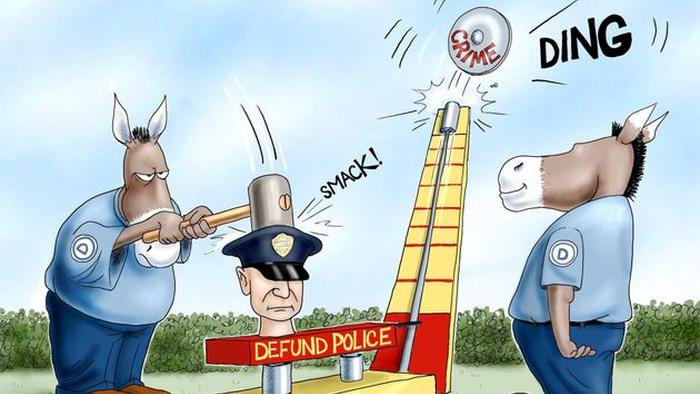
Escape From Woke Metropolises Authored by Rob Dreher via TheAmericanConservative.com, Last weekend in Chicago, there were 54 shootings, five of them fatal. This was one of the fatal shootings. Warning: it’s graphic: Chicago shooting of Gyovanny Arzuaga and Yasmin Perez on June 19 as they drove with their flag, 1 killed, 1 critically wounded in Humboldt Park pic.twitter.com/p9YcaZJmWU — 🇺🇸 Shavo 🇺🇸 (@d_shavo) June 20, 2021 Look at these two dirtbags, just standing there filming it: Last week, Chicago Mayor Lori Lightfoot, who is black, declared that racism is a “public health emergency” in her city, and diverted $10 million in federal Covid funds to fight racism. Clearly, Chicago’s mayor has things well in hand, and has no problem at all facing reality. The Chicago Bears are thinking of relocating to a suburb for a bigger stadium, and Mayor Lightfoot seems more concerned about that than mass murders.Two years ago, she blamed Texas gun laws for Chicago’s killing sprees. But Chicago’s police superintendent said that same summer that the problem was that the cops keep re-arresting the same thugs, whom the criminal justice system recycle back onto the street. This is what happens when you elect Woke Democrats to run your city. By the way, Chicago’s DA Kim Foxx was backed by leftist billionaire George Soros, who has been pouring his money into electing progressive DAs in big cities. San Francisco DA Chesa Boudin is a Soros acolyte, as is Baltimore DA Marilyn Mosby. All those cities are overrun by crime. Reader Jonah R., who lives in suburban Maryland, left this comment: On Thursday four young black men drove to a public elementary school in the mostly white, affluent DC neighborhood of Cleveland Park, where they fired more than 40 shots at the school in front of nearly 150 witnesses, hitting two construction workers who were renovating the building and fortunately not hitting any children only because they were in nearby trailer classrooms because of the renovation. The police chased them and caught them when they crashed their car. So far there appears to be no explanation for it other than four black dudes wanted to go randomly shoot up a white school. Let me know if this makes the national news where you live. I’m sure it won’t. But this is what happens when criminals feel emboldened by anti-policing rhetoric. In Baltimore, where the DA has implemented a policy of not prosecuting misdemeanors and low-level crimes, criminals are starting to enjoy a free-for-all environment. The tourist/bar/restaurant neighborhood of Fells Point has seen multiple shootings in the past couple weeks, with one triple shooting occurring just 25 feet from a group of police officers. Some local businesses are refusing to pay their taxes and are putting the money in escrow instead. The neighborhood, already a place for a fun night out at the bars, has been looking like Mardi Gras in recent weeks, but without the cops enforcing laws like they do in New Orleans during Mardi Gras. There’s footage of drunks jumping on police cars while the cops just watch. About a week ago, someone went into Fells Point late at night and just randomly shot a bunch of cars. Some restaurants whose owners had been desperate to reopen are closing at 9 p.m. so their employees can get home safely. Some businesses are hiring private security. Police are not enforcing open container laws, parking and traffic regulations, or laws against people openly selling drugs and liquor on the streets. Only in the past few days have the cops come in, but in pointlessly massive numbers, and they’ve closed streets and manned checkpoints, going to the opposite extreme, as if to spite the neighborhood peons who complained. I haven’t checked the news from Minneapolis lately. Is the community of activist hobos that formed around the site of George Floyd’s death still illegally “occupying” the site and inviting anarchy? There were three fatal shootings there in their “autonomous zone” in 2020 and one fatal shooting so far this year. How about a year of activists trying to burn down federal buildings in Portland? Plus, staffing of the Portland police is at its lowest in decades, and there’s been a huge surge of brazen gang violence. According to the AP, Portland disbanded its special unit dedicated to curbing gun violence because activists believed it disproportionately harmed black people. This is what happens when the “defund the police” chant–which is, yes, a fringe activist fantasy–becomes policy because people are too afraid to stand up to aggressive activists. I live in a safe multicultural suburb, so I’m fine, but my friends and relatives in cities like DC, Baltimore, and New York are freaking out. You can’t for a minute pretend that the rhetoric of the past year didn’t play a role in this surge of violence in our cities. Tyler Durden Wed, 06/23/2021 - 20:00
http://dlvr.it/S2L1r4

The "Great Reset" Is Here, Part 1: The New Blueprint For Worldwide Inflation

The "Great Reset" Is Here, Part 1: The New Blueprint For Worldwide Inflation Authored by James Rickards via DailyReckoning.com, For years, currency analysts (myself included) have looked for signs of an international monetary “reset” that would diminish the dollar’s role as the leading reserve currency and replace it with a substitute, which would be agreed upon at some Bretton Woods-style monetary conference. Now, it looks like the move towards the long-expected Great Reset is accelerating. At the recent G7 summit in the UK, G7 leaders gave their blessings to a $100 billion allocation of IMF special drawing rights (SDRs) to help lower-income countries address the COVID-19 crisis. President Biden fully supports the idea. The White House issued the following statement: The United States and our G7 partners are actively considering a global effort to multiply the impact of the proposed Special Drawing Rights (SDR) allocation to the countries most in need… At potentially up to $100 billion in size, the proposed effort would further support health needs – including vaccinations… A separate press release from the same day continued the same sentiment, stating, “We strongly support the effort to recycle SDRs to further support health needs.” In another development, IMF Managing Director Kristalina Georgieva said last Wednesday that she expected the fund’s governors to approve a $650 billion allocation of SDRs in mid-August. What exactly are SDRs? Basically, they’re world money. In 1969, the IMF created the SDR, possibly to serve as a source of liquidity and alternative to the dollar. In 1971, the dollar did devalue relative to gold and other major currencies. SDRs were issued by the IMF from 1970 to 1981. None were issued after 1981 until 2009 during the global financial crisis. The 2009 issuance was a case of the IMF “testing the plumbing” of the system to make sure it worked properly. Because zero SDRs were issued from 1981–2009, the IMF wanted to rehearse the governance, computational, and legal processes for issuing SDRs. The purpose was partly to alleviate liquidity concerns at the time, but it was also to make sure the system works in case a large, new issuance was needed on short notice. The 2009 experiment showed the system worked fine. Since 2009, the IMF has proceeded in slow steps to create a platform for massive new issuances of SDRs and establish a deep liquid pool of SDR-denominated assets. On January 7, 2011, the IMF issued a master plan for replacing the dollar with SDRs. This included creating an SDR bond market, SDR dealers, and ancillary facilities such as repos, derivatives, settlement and clearance channels, and the entire apparatus of a liquid bond market. A liquid bond market is critical. U.S. Treasury bonds are among the world’s most liquid securities, which makes the dollar a legitimate reserve currency. The IMF study recommended that the SDR bond market replicate the infrastructure of the U.S. Treasury market, with hedging, financing, settlement and clearance mechanisms substantially similar to those used to support trading in Treasury securities today. In August 2016, the World Bank announced that it would issue SDR-denominated bonds to private purchasers. Industrial and Commercial Bank of China (ICBC), the largest bank in China, will be the lead underwriter on the deal. In September 2016, the IMF included the Chinese yuan in the SDR basket, giving China a seat at the monetary table. So, the framework has been created to expand the SDR’s scope. The SDR can be issued in abundance to IMF members and used in the future for a select list of the most important transactions in the world, including balance-of-payments settlements, oil pricing, and the financial accounts of the world’s largest corporations, such as Exxon Mobil, Toyota, and Royal Dutch Shell. The basic idea behind the SDR is that the global monetary system centered around the dollar is inherently unstable and needs to be reformed. Part of the problem is due to a process called Triffin’s Dilemma, named after economist Robert Triffin. Triffin said that the issuer of a dominant reserve currency had to run trade deficits so that the rest of the world could have enough of the currency to buy goods from the issuer and expand world trade. But, if you run deficits long enough, you would eventually go broke. This was said about the dollar in the early 1960s. The SDR would solve Triffin’s Dilemma. I wrote about SDRs and the global elite plans for them in the second chapter of my 2016 book, The Road to Ruin. Over the next several years, we will see the issuance of SDRs to transnational organizations, such as the U.N. and World Bank, for spending on climate change infrastructure and other elite pet projects outside the supervision of any democratically elected bodies. I call this the New Blueprint for Worldwide Inflation. But Triffin’s Dilemma is not the only dynamic that’s pushing the world away from the dollar. In Part 2, we show you why the weaponization of the dollar by the U.S. government is pushing the world to seek alternatives. Tyler Durden Wed, 06/23/2021 - 19:20
http://dlvr.it/S2Kwmf

Tuesday, June 22, 2021

Georgia Conducting Secret 2020 Election Review Over Suspicious Mail-In Ballots

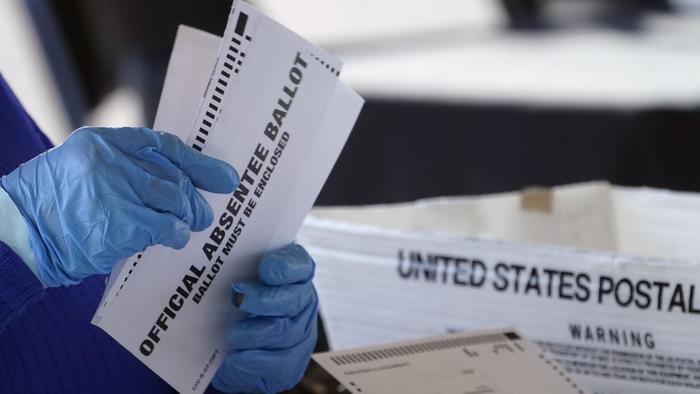
Georgia Conducting Secret 2020 Election Review Over Suspicious Mail-In Ballots Authored by Paul Sperry via RealClearInvestigations.com, After several Fulton County, Ga., poll monitors testified last year that boxes of mail-in ballots for Joe Biden looked liked they’d been run through a photocopy machine, state investigators quietly broke the seal on one suspicious box and inspected the hundreds of votes it contained for signs of fraud, RealClearInvestigations has learned exclusively. At the same time, a key whistleblower told RCI that state investigators pressured her to recant her story about what she and other poll monitors had observed -- what they called unusually “pristine” mail-in ballots while sorting through them during last November’s hand recount. “I felt I was under investigation,” said Suzi Voyles, a longtime Fulton County poll manager whose sworn affidavits have been used by election watchdogs to sue the county for access to the ballots in question. Although the ballots are at the center of disputes about the Georgia presidential race, which Joe Biden won by just 12,000 votes, the state never disclosed its probe to the public or to election watchdogs suing to inspect the ballots. State officials also neglected to inform the judge hearing the lawsuit that they were conducting such an inspection, even though the judge had issued a protective order over the ballots in January. In a nine-page amicus brief recently filed in the case, attorneys for the office of Secretary of State Brad Raffensperger urged Superior Court Judge Brian Amero to deny petitioners’ requests to inspect the ballots, calling them a “fishing expedition.” Frances Watson, chief investigator for the secretary of state’s office, confirmed in a statement to RCI that she sent investigators to Fulton County earlier this year to inspect the batches of sealed ballots. Poll monitors involved in last November’s hand recount had described the mail-in ballots in sworn affidavits as devoid of creases and folds and featuring identically bubbled-in marks for Biden. But the state said it could not find any ballots matching that description. “Our investigators looked into it and didn’t find anything,” she said, while adding the investigation is “still ongoing.” The watchdogs question why state officials did not disclose their activities to the court and fear they may have “tampered” with the sealed ballots, which are at the center of their lawsuit seeking access to all 147,000 absentee ballots cast during the 2020 election in Fulton County, which includes much of Atlanta. Led by longtime Georgia poll watcher Garland Favorito, founder of VoterGA.org, the court petitioners say the state has failed to inform the judge overseeing their case that they broke the chain of custody over the pallets of shrink-wrapped absentee ballots warehoused in a locked county facility in Atlanta. “If the secretary of state’s office did that, they tampered with the ballots and violated Georgia state law,” which restricts the handling of ballots to authorized elections officials involved in the tabulation and care of the ballots, Favorito said. He also noted that Judge Amero had placed the ballots under a protective order in January. “They would have had to ask for a court order to unseal and inspect those ballots and they never did that.” Raffensperger’s office seemed to acknowledge the ballots were still under seal when it urged Amero to prevent the watchdogs from inspecting the ballots. “The security and confidentiality of ballots is to be strictly maintained,” attorneys for Raffensperger argued in the brief they filed with Amero in April, “and the court should be cautious in granting petitioners’ access to ballots that Georgia law requires to remain under seal, which makes it a felony as soon as petitioners were to lay hands on them.” Raffensperger’s office did not respond to questions about why it did not inform the court about its probe, although it acknowledged that this is the first time its inspection of the ballots – which began in early January – has been publicly disclosed. Judge Amero did not respond to requests for comment. Biden narrowly won Georgia thanks to a late-night tally of absentee ballots in Fulton and other Democratic strongholds. The revelation that state authorities have already unsealed and investigated the ballots in question is a new twist in a case that has seen the firing of poll managers who blew the whistle on the suspicious ballots; a recent breach of security at the warehouse that Fulton County officials were supposed to be guarding around the clock; and an 11th-hour attempt by county officials to dismiss the court-ordered inspection of those ballots – many of which came from Atlanta area drop boxes whose chain of custody documentation has mysteriously turned up missing. Last month Amero ordered Fulton County to unseal its 147,000 absentee ballots and allow the petitioners to inspect them under certain restrictions, but the county filed a motion to dismiss the case. Amero is expected to rule on the motion later this month. The issue is further muddied by Suzi Voyles’ allegation, never previously reported, that she was pressured to recant her testimony about the pristine ballots. In sworn affidavits last November, Suzi Voyles said she observed that a large batch of mail-in ballots for Biden did not appear to have been folded or handled like she would have expected from her two decades of working elections in the county. She also said that the marks for Biden were identical, as though they had been filled in by a copying machine rather than a pen or pencil. In a Jan. 7 interview, which took place at a secretary of state’s office in Atlanta, Voyles told RCI that an investigator identifying himself as Paul Braun “grilled me for over two hours” about her testimony. She said he was joined by another official whom she said was from the Georgia Bureau of Investigation. She added that the investigators did not have a copy of her affidavit and did not know the box number and batch numbers of the ballots in question. “I smelled a rat when they didn’t know the batch numbers when they were clearly denoted in my affidavit,” Voyles said. She added the investigators “gave no indication" they had gone to the warehouse to find the suspicious ballots or were conducting any kind of forensic investigation. Voyles said the investigators kept trying to convince her she might have been mistaken about her observations. “I did not recant,” she asserted. The ballots that I saw had been pre-printed. It’s a very serious thing in my opinion. That’s what I swore to under penalty of perjury. Recanting would be perjuring myself.” Watson told RCI that Voyles “stated that she may have been mistaken about the batch number and provided a different batch number." “I never said that,” Voyles insisted. "The second batch number provided by Ms. Voyles did not exist,” Watson added. Voyles contended she never provided any other batch numbers. Watson also revealed that “investigators went to Fulton County and reviewed the batches identified by Ms. Voyles, but found no ballots that looked as Ms. Voyles described.” Favorito said his group’s attorney plans to file a motion to depose Watson and Braun to understand exactly what investigators have done regarding the boxes of absentee ballots in question. Favorito said he does not doubt Voyles’ testimony and said the ballot images his group has reviewed support her account of anomalies. “At no time has Susan Voyles claimed she was mistaken,” Favorito said. “She has consistently stood by her affidavit since she submitted it almost seven months ago.” Asked if Voyles is under criminal investigation, Georgia Secretary of State Communications Director Ari Schaffer said, “I have no reason to believe she’s under investigation for perjury.” Last December, Raffensperger “condemned” the unexplained firing of Voyles by Fulton County elections officials and called on them to rehire her. As RCI previously reported, Voyles is one of four Fulton County poll monitors who signed affidavits swearing they observed the same pattern of irregularities in stacks of mail-in ballots for Biden. All of them suggested the ballots had been photocopied. Favorito, who did not vote for Trump, said the state has also tried to interview one other witness – poll monitor Robin Hall – and said he himself is under investigation. He suggested state investigators are trying to intimidate witnesses into backing off their testimony, and are more interested in investigating whistleblowers than finding evidence of ballot fraud. Schaffer said he was unsure whether the other affiants have been interviewed. “I’ll have to check on the other three” witnesses, he said. Favorito added that the discovery of hard evidence of fraud in Georgia’s largest county would be embarrassing for Raffensperger, who is running for reelection with little support from the Georgia GOP, which recently censured him for creating “opportunities for fraud” by agreeing to the relaxation of voting rules during the 2020 election. “He is worried that we will uncover serious wrongdoing on the part of the secretary of state, not just Fulton County,” Favorito said. Voyles pointed out that Raffensperger has been too quick to declare the 2020 Georgia election free of fraud. Most recently, he was blindsided by revelations that Fulton County election officials had “misplaced” the required chain-of-custody forms documenting the collection of almost 20,000 mail-in ballots from 36 largely unsupervised drop-off boxes Raffensperger agreed to let Democrat-controlled Fulton County distribute across the Atlanta area ahead of the Nov. 3 presidential election. “New revelations that Fulton County is unable to produce all ballot drop-box transfer documents will be investigated thoroughly,” Raffensperger tweeted June 14, adding that Fulton officials failed to follow state rules regarding the boxes. “This cannot continue.” Voyles said Raffensperger’s office is increasingly concerned about its pre-election decision to mollify demands by Democratic voter-rights group to make it easier to vote by absentee ballot. “They are investigating us to divert attention from their consent agreement with [Democratic activist] Stacey Abrams,” she said. “We never should have had any drop boxes. We wouldn’t have had chain-of-custody problems and the other problems with absentee ballots if they hadn’t put in those drop boxes,” Voyles added. "It was negligence.” Tyler Durden Tue, 06/22/2021 - 21:25
http://dlvr.it/S2GM4z
COVID-19 VACCINE MIND CONTROL REVEALED

from Infowars: TRUTH LIVES on at https://sgtreport.tv/
http://dlvr.it/S2GKBK

Watch: US Patrol In Syria Blocked By Line Of Russian Commandos

Watch: US Patrol In Syria Blocked By Line Of Russian Commandos Authored by Jason Ditz via AntiWar.com, Over the weekend, a US military patrol in northeastern Syria was blocked by the Russian military and forced to turn back to where they came from. The US reportedly violated existing security deals with Russia. Video of the brief encounter published by the Russian side shows the tense moment that Russian troops physically blocked the road while clutching their rifles: #Russian forces, ensuring safe movement of convoys along the M-4 near Tell-Tamr in #Hasakah province, #Syria, block the encroachment of a US #American patrol with four MaxxPro and Oshkosh M-ATV armored vehicles. From Rusvesna, 20 June 2021, story here: https://t.co/475iZEsNWL pic.twitter.com/LCTtMlggiq — tim anderson (@timand2037) June 20, 2021 The US and Russia both have troops in reasonably close proximity in Syria, and the US tends to hype confrontations heavily. To try to reduce the number of issues, they’ve made several deals to coordinate their patrols and avoid running into one another. That works well, as far as it goes, but in this case the US didn’t inform Russia ahead of time, so when the Russian forces ran into them, they complained about the US ignoring protocol on prior notice. The US has not commented on why they ignored the protocol, but it’s not clear why they bother to patrol anyhow, since the US presence is very limited, a hold-over from President Trump’s plan to take Syria’s oil. Patrolling into adjoining Kurdish areas means the US retains some ties to the Kurds, but with Russia and Turkey also in the area, it’s a potentially complicated matter, especially if the US considers previous deals to be optional. Tyler Durden Tue, 06/22/2021 - 20:45
http://dlvr.it/S2GGzc