MicroStrategy Buys Another $10 Million Of Bitcoin, Adds To Reserve
Via PlanetFreeWill.news,
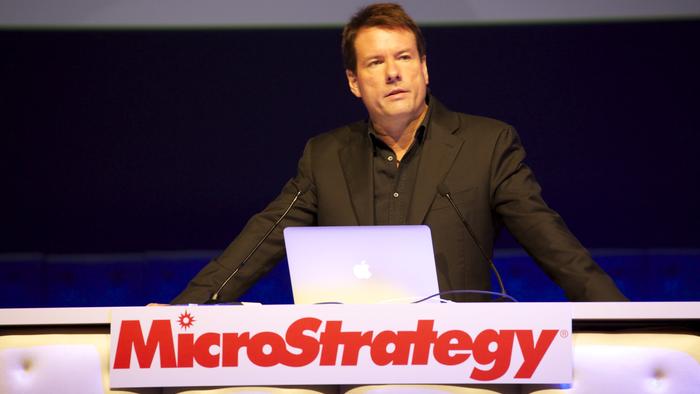
Business intelligence and mobile software firm MicroStrategy has further added to its bitcoin holdings, disclosing on Tuesday that it purchased an additional $10,000,000 of the world’s largest crypto by market capitalization.
“MicroStrategy has purchased approximately 295 bitcoins for $10.0 million in cash, at an average price of ~ $33,808 per #bitcoin. We now [hold] ~ 71,079 bitcoins acquired for $1.145 billion at average price of ~ $16,109 per bitcoin,” the Company’s CEO, Michael Saylor, tweeted.
MicroStrategy has purchased approximately 295 bitcoins for $10.0 million in cash, at an average price of ~ $33,808 per #bitcoin. We now #hodl ~ 71,079 bitcoins acquired for $1.145 billion at average price of ~ $16,109 per bitcoin.https://t.co/lmj3QCgKbw — Michael Saylor (@michael_saylor) February 2, 2021
MicroStrategy first disclosed it was purchasing bitcoin as a part of its treasury reserve policy in August 2020 when at the time the company purchased 21,454 bitcoin at a price of $250 million.
CEO Michael Saylor has been vocally touting bitcoin as a more superior reserve asset and store of value than the US dollar and gold.
“We find the global acceptance, brand recognition, ecosystem vitality, network dominance, architectural resilience, technical utility, and community ethos of Bitcoin to be persuasive evidence of its superiority as an asset class for those seeking a long-term store of value,” Saylor said after the intital disclosure, adding:
“Bitcoin is digital gold – harder, stronger, faster, and smarter than any money that has preceded it. We expect its value to accrete with advances in technology, expanding adoption, and the network effect that has fueled the rise of so many category killers in the modern era.”
On February 3 and 4, MicroStrategy is hosting a corporate conference titled “Bitcoin for Corporations“ where the company will share strategies on acquiring and using bitcoin as a treasury reserve asset.
According to Saylor, the bitcoin themed conference is attracting more CEO attention than any event they have held in the past.
I have never seen so many CEOs sign up to attend one of our events. Send yours, or come join our sessions & report back to your team. Every company can benefit from plugging into the #Bitcoin Monetary Network. https://t.co/17j3OZuswC — Michael Saylor (@michael_saylor) February 1, 2021
As Coin Desk notes, in the company’s earnings call last week, Saylor had mentioned that MicroStrategy is set to “continue to actively manage” its balance sheet and “progressively acquire more bitcoin” at prices “that probably keep going up.”
“Regarding our bitcoin strategy, our pioneering decision to make bitcoin our primary treasury reserve asset has made MicroStrategy a thought leader in the cryptocurrency market and generated great interest in MicroStrategy as a corporation,” the CEO said.
Since starting its allocation into bitcoin, MicroStrategy’s stock price has increased over 350%.
Tyler Durden Tue, 02/02/2021 - 15:45
http://dlvr.it/RrtDHV

Tuesday, February 2, 2021
The ECB Is Playing A Dangerous Game With "Collective Action Clauses" On Bonds
Authored by Malachy McDermott via The Mises Institute,
There is a clause to European bond sales called a collective action clause. In fact, “all bonds issued by Eurozone member states with maturities exceeding one year, issued after January 1, 2013, have a mandatory collective action clause."
This clause is the first part in a dangerous game of perpetual growth with zero savings that European Central Bank (ECB) and the International Monetary Fund (IMF) are playing at the moment.
But firstly, what is a collective action clause (CAC)? To put it simply, it's a mechanism whereby a bond's value can be legally reduced by the issuer in times of hardship, originally very unpopular (in the '80s and '90s). Geoffrey Okamoto and others at the IMF and at central banks say that countries that were not allowed to do this to issued bonds experienced stagnation.
Normally, CACs need to be agreed to by the supermajority of bondholders; however, this may be pushed to the point of not mattering, as the single biggest bondholder will be the ECB and the domestic market will make up the rest of the votes needed. This is especially true in countries like Ireland and Italy.
The CACs were first introduced by the EU in relation to the Greek debt crisis. It was agreed to slash bond values to around a third of their original value. This then gave rise to the policy whereby all bonds in the eurozone came with this clause.1 This would lead some to see the bonds as less attractive to investors (especially in terms of Greece, Ireland, Spain, etc).
However the ECB has another trick up its sleeve.
It’s become the investor, on an epic scale. The Fed and Bank of Japan (BOJ) purchase 20 to 40 percent of government bonds in their respective countries; however, looking at Ireland, the ECB purchased 50 percent of Irish government bonds in 2020, and there are plans to expand this policy in future years.
The ECB's rules mean it should not hold more than around a third of all Irish bonds, but with the Irish Central Bank owning 7.5 percent and acting as a regulated subsidiary of the ECB, this may be little more than window dressing for the moment. The introduction of the Pandemic Emergency Purchase Programme (PEPP) means that the EU can purchase bonds based on the size of the country’s economy rather than a fixed percentage, and although there are calls to stop this after the pandemic, the damage will already have been done.
The cycle may be seen as the ECB trying to build a perpetual motion machine. They print euros to buy bonds from governments with collective action clauses. Euros are malinvested by governments, creating bubbles etc. When the bond yield gets too high and the bubbles burst, the CACs sets in, reducing the amount needed to pay out. This allows the government to reinvest in its economy, and once this reaches a position of strength again, more bonds can be issued.
There are several issues with this perpetual, increasing consumption machine, though. Once more, the ECB is failing to learn from the Fed. Bond-driven banks in the US reacted in the following way to a liquidity crisis: when it had been “expected that the handful of large Wall Street banks that hold about a quarter of US banks’ total reserves would lend them out overnight when rates rose high enough…that did not happen.” The adage “cash is king” comes to mind. Now imagine the bonds being issued by Ireland and Greece and containing CACs. Will banks be likely to lend out cash reserves when the next-best store of value they might have is a junk bond that can be devalued at a moment's notice?
Without being able to sell these bonds on, the ECB will be forced to retain them on its own balance sheet, which is not going to make the euro look like a terribly attractive investment either. The hope has always been that a reduction in the euro’s value through the bond-buying method would increase exports, give the stock market a boost, etc.; however, this also seems unlikely if banks are unwilling to lend and the investments are in the hands of the government.
The ECB's dangerous game does not look like it is heading for anywhere but the past, the terrible past with all of its stories and parables of what not to do, being once again ignored for us to repeat the failures of history. Tyler Durden Tue, 02/02/2021 - 03:30
http://dlvr.it/Rrqt71
Monday, February 1, 2021
Gazprom Records Highest-Ever January Natgas Sales To Europe Amid Deep Chill
A stratospheric warming event in the North Pole split the polar vortex in half last month, allowing Arctic air to spill into Europe. January temperatures on the continent were well below average, which resulted in a spike in energy demand.
Due to the cold weather, energy demand went through the roof. Russia's Gazprom reported Feb. 1 that gas sales to Europe were the highest ever for January, exceeding 19.4 billion cubic meters of natural gas.
"European gas demand last month was buoyed by cold weather across the continent, with several countries seeing extremely low temperatures during the month," said S&P Global Platts.
Gazprom said sales to Germany rose 32.4% but actual volumes were not given. Sales also increased in Italy (by 221.5%), Poland (89.9%), France (77.3%), the Netherlands (21.2%), and Turkey (20.8%).
Last month, we pointed out, increased gas demand resulted in soaring prices in Spain and U.K.
Gazprom gas sales to Europe could remain elevated as Bloomberg reports colder weather throughout the Nordic region is set to pour into Germany, France, and the U.K.
Between Feb. 6-10 period, heating degree days, the amount of energy it takes to heat a structure, is forecasted at about 88.1, well above the 10-year normal of 83.
The Weather Channel also reports below-average temperatures across the U.K., the Nordic region, mainland, and southeast Europe next week.
GFS 2 Meter Temperature For Europe Between Feb.1 - Feb.11
U.K. natural gas prices have more than doubled from the beginning of December through early January. Prices have since slumped.
Meanwhile, on the other side of the Atlantic, the U.S. is getting blasted with feet of snow and chilly temperatures. Tyler Durden Tue, 02/02/2021 - 02:45
http://dlvr.it/Rrqky7
Twitter Temporarily Silenced Christian Organization for “Misgendering” Biden’s Assistant Health Secretary
by Evan James, Big League Politics: Remember that some think “misgendering” is an act of violence. Twitter recently silenced a Christian organization for accurately referring to the biological sex of Rachel Levine, assistant health secretary at the Department of Health and Human Services (HHS). The account belongs to The Daily Citizen, a Christian news site operated by a […]
http://dlvr.it/Rrq87v
Top NY Virus Officials Quit As Cuomo Wages "War" With His Own Health Department
While the mainstream media continuously amplified all those unsourced rumors about President Trump's reported battles with his top public health officials - particularly Dr. Anthony Fauci - it almost seemed like a miracle when the Pfizer-BioNTech vaccine started rolling off the assembly lines after all that dysfunction.
Well, as it turns out, the media narrative doesn't always perfectly reflect reality. And one of the most glaring examples during the US pandemic response was Andrew Cuomo's handling of the response in the Empire State.
Hailed as an effective leader by Democrats, Cuomo's smiling face graced 1000s of articles; but all of this belies the many mistakes he made both during the early days of the Pandemic, to the botched vaccine rollout, where Cuomo's policies led hospitals to keep vaccines rotting on shelves in the name of "racial equality".
Things have not gone so well in the PR space for the Governor in recent weeks. New York State Attorney General Letitia James released a report last Thursday detailing the investigations her office has conducted into nursing homes policies and actions during the pandemic. The report shows that the nursing home deaths in New York State were likely undercounted by up to 50 percent.
The investigation, ongoing since March, when Governor Cuomo issued his directive to send COVID patients back to nursing homes following hospitalizations, was begun due to allegations of "patient neglect and other concerning conduct," according to The Post-Journal.
Cuomo made headlines earlier this week for saying that "incompetent government kills people."
The situation worsened in recent months as state health officials said they often found out about major policy changes, like, reopening restaurants, via the press.
In recent weeks, the governor has repeatedly made it clear that he believed he had no choice but to seize more control over pandemic policy from state and local public health officials, who he said had no understanding of how to conduct a real-world, large-scale operation like vaccinations.
After early problems, in which relatively few doses were being administered, the pace of vaccinations has picked up and New York is now roughly 20th in the nation in percentage of residents who have received at least one vaccine dose.
Many of Cuomo's top public health officials were so angry about being left out of the loop (so to speak) they abruptly quit, prompting the NYT to tout in a headline that Cuomo had "declared war" on his own department of public health.
But at least nine senior state health officials have left the department, resigned or retired in recent months.
They include Elizabeth Dufort, the medical director in the division of epidemiology; Dr. Jill Taylor, the head of the renowned Wadsworth laboratory — which has been central to the state’s efforts to detect virus variants — and the executive in charge of health data, according to state records.
Additionally, the Health Department’s No. 2 official left for another job in state government, and another official, who helped oversee contact tracing, is expected to leave the department, also for another state government jo
Dr. Zucker said in a statement that the state was facing “an intense period of extraordinary stress and pressure and a different job than some signed onto."
He added: “The Times’s point is several staff left - true, and many others joined the agency with the talents necessary to confront this new challenge.” The proof, he said, “is in the performance numbers"
Several top Dems agreed, and told the NYT that the red tape enacted by the governor was unnecessary and unsustainable.
“Extensive red tape and unnecessary rigidity over who we could vaccinate and when - all with the looming threat of millions of dollars in punitive fines - made an extraordinarily difficult task all the more challenging in those first initial weeks of the rollout,” said Avery Cohen, a spokeswoman for Mayor de Blasio.
In his own planning for the vaccine rollout, Mr. Cuomo spoke with hospital executives, outside consultants and a top hospital lobbyist in closed-door meetings. In December, Mr. Cuomo announced that the state would rely on large hospital systems as “hubs” to coordinate vaccinations, not simply for their own staff but also for ordinary New Yorkers.
In other words, with the return of indoor dining just weeks away in NYC, it's beginning to look like Cuomo's vaccine rollout isn't designed with efficiency in mind; instead it was inspired by a megalomaniac politician desperately trying to sell copies of his new book while virtue-signaling. Tyler Durden Mon, 02/01/2021 - 20:20
http://dlvr.it/RrpygX
Steve Cohen Opens Fund To New Investor Cash After Losses From Melvin Capital Bailout
First it was Melvin (no) Capital demanding more, well, capital form existing investors such as Citadel and a new investor, Steve Cohen's Point72, following news that i had lost a third of its AUM in just one trading day following the massive squeeze in GME and other meme stocks. Then, a few days later, over the weekend we learned that the two anchor investors were already underwater on their investment, as the losses at Melvin accelerated, bringing the total to over $7 billion or some 53% of the fund's AUM, at which point we joked that the "new" investors may need new investors themselves.
Now, this (formerly comic) scenario is becoming all too real because as Charlie Gasparino reports, Steve Cohen - who over the weekend killed his Twitter account due to "threats", is offering investors the "unique" opportunity to throw even more good money after bad, and his Point 72 fund "is no longer closed to new investors and began raising new investor cash from brokerages like @MorganStanley last week- sources. As Gasparino explains, the move comes "amid losses at firm due to exposure to Melvin Capital, the depressed hedge fund at the center of the GME frenzy. Person close to Pt72 contends that Cohen sees opportunities as mkts slide. Others say the timing is interesting."
(2/2) of the $GME frenzy. Person close to Pt72 contends that Cohen sees opportunities as mkts slide. Others say the timing is interesting. Story developing more w @LizClaman @FoxBusiness at 345pm — Charles Gasparino (@CGasparino) February 1, 2021
Yes, the timing may be "interesting" but what is even more interesting is just how big the rolling capital shortfall is at Point72 now that the fund has backstopped what is ultimately a crippled Melvin Half Capital, which despite the new money infusion, is sure to liquidate once the redemption requests start coming in, locking in a sizable loss for Steve Cohen in just a few days. Steve Cohen seen here when his investing reputation was much more solid.
The only winner here may well be Melvin's Gabe Plotkin who, as we reported yesterday, was busy adding a tennis court to his $44 million Miami beachfront mansion when his hedge fund imploded, and who lucked out by finding some greater fools to make sure said expansion isn't thwarted by the lack of (Melvin) Capital. Tyler Durden Mon, 02/01/2021 - 15:34
http://dlvr.it/RrpKpg
YouTube Deletes Testimony of Doctors Refuting COVID-19 Hysteria From Senator’s Page
by Shane Trejo, Big League Politics: They are keeping the public in mass hysteria. YouTube has deleted footage of Senate hearings held by Sen. Ron Johnson (R-WI) from his own channel on the platform in which doctors gave opposing views to the mandated globalist consensus on COVID-19 Johnson made the announcement in a Twitter post […]
http://dlvr.it/RrlyDr
Subscribe to:
Posts (Atom)