Friday, October 2, 2020

Joe Biden Wishes President & First Lady A "Speedy Recovery"

Joe Biden Wishes President & First Lady A "Speedy Recovery" Tyler Durden Fri, 10/02/2020 - 09:01 After Joe Biden and his top aides acquiesced to Democrats urging him to campaign more aggressively by deciding to restart in-person canvassing, President Trump - Biden's top political rival - has tested positive. And in his first remarks on Trump's infection, Biden and his wife Jill Biden, the former second lady, Jill and I send our thoughts to President Trump and First Lady Melania Trump for a swift recovery. We will continue to pray for the health and safety of the president and his family. — Joe Biden (@JoeBiden) October 2, 2020 One of Biden's aides told the press earlier that the former VP would be tested Friday morning. We're now waiting on the results.
http://dlvr.it/Rhpf5k

US Unemployment Rate Unexpectedly Plunges Below 8% As 661K Jobs Added

US Unemployment Rate Unexpectedly Plunges Below 8% As 661K Jobs Added Tyler Durden Fri, 10/02/2020 - 08:36 In a repeat of last month when the monthly payrolls came in as expected but the unemployment rate dropped far more than expected, moments ago the BLS report that in September a total of 661K jobs were added, below the 868K expected, and less than half the 1.489MM in August... ... but offsetting this disappointment was the plunge in the unemployment rate which tumbled by a whopping 50bps from 8.4% to 7.9%, with rates for both blacks and Hispanic plunging as well. Developing    
http://dlvr.it/RhpXCN

Thursday, October 1, 2020

Debt, Zombies, And Geopolitics: China's Belt-And-Road Initiative During COVID

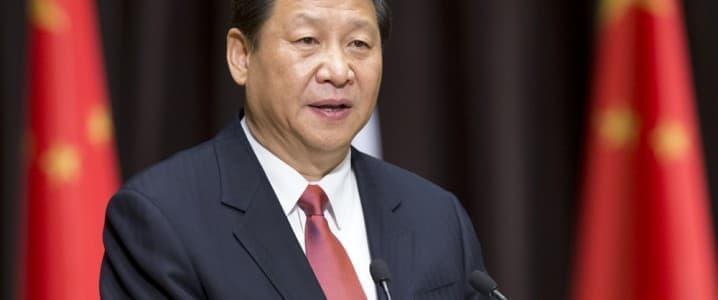
Debt, Zombies, And Geopolitics: China's Belt-And-Road Initiative During COVID Tyler Durden Thu, 10/01/2020 - 21:20 Authored by Jon (Yuan) Jiang via The Jamestown Foundation, Introduction The Belt and Road Initiative (BRI) has been a focal issue for understanding the foreign policy of the People’s Republic of China (PRC). Some observers view the BRI as representing a new phase of economic globalization and regional economic integration. Others argue that the BRI’s primary motivating factors are domestic and that the massive program is chiefly aimed at creating new markets, maintaining economic stability, resolving regional development imbalances, and transferring industrial overcapacity. Both views have their valid points, but overlook the BRI’s key role in supporting China’s domestic economic reforms. This article argues that the BRI should be understood as a major component of China’s program of “supply-side structural reform” (gongjice jiegouxing gaige). The “Authoritative Person” and Supply-Side Structural Reform The BRI was first announced in 2013 and officially incorporated into the PRC constitution in 2017 (Xinhua, October 24, 2017). The concept of “supply-side structural reform” (SSSR) was reportedly introduced by the Chinese Communist Party (CCP) General Secretary Xi Jinping in late 2015 and developed into a significant component of Beijing’s economic policy framework (Xinhua, April 3, 2018). In a speech to the 19th Party Congress, Xi stated that “We should pursue supply-side structural reform as our main task, and work hard for better quality, higher efficiency, and more robust drivers of economic growth through reform” (China Daily, December 18, 2019). Throughout 2015 and 2016, the People’s Daily, the CCP’s most authoritative newspaper, published a series of interviews with an anonymous “authoritative person” (quanwei renshi) that discussed the concept of SSSR (People’s Daily, May 25, 2015; January 4, 2016; May 9, 2016). It has been widely understood that the information presented in this series of interviews came either from the offices of Liu He (??), director of the General Office of the Central Financial and Economic Affairs Commission (Zhongyang Caijing Weiyuanhui Bangongshi), or else from Liu himself. Liu is one of the PRC’s chief economic architects and has been described by party media as “one of the masterminds behind China’s supply-side structural reforms“ (People‘s Daily, March 20, 2018). In the interviews, the “authoritative person” concluded that a return to China’s former debt-stimulated growth rate of ten-plus percent a year would be impossible, and instead stressed the sustainable and qualitative development of the Chinese economy. To this end, the main tasks of the SSSR are to improve the quality and efficiency of supply; promote structural adjustments; correct the allocation distortion of factors of production; enhance the adaptability and flexibility of the supply structure to changes in demand; and advance total factor productivity (People’s Daily, January 4, 2016). More concretely, SSSR encompasses five core policy objectives: 1) cutting excess industrial capacity; 2) reducing leverage in the corporate sector; 3) reducing property inventories; 4) lowering costs for businesses, and 5) addressing “weak links” in the economy (a euphemism for poverty reduction). China’s BRI is well-positioned to address the first and fourth goals of SSSR. Hu Huaibang, former Chairman of the China Development Bank, has argued that the BRI can offset the problem of increasing labor costs through the structural transformation of China’s economy (People’s Daily, July 16, 2018). In this way, the BRI alleviates industrial overcapacity by transferring low-end manufacturing industries to less developed countries with lower labor costs. SSSR and China’s Persistent Problem of Corporate Debt The most crucial objective of SSSR is reducing leverage in the corporate sector. At the 2017 National Financial Work Conference, Xi stated that “financial stability is the basis of national stability, and deleveraging state-owned enterprises is the top of the top priorities. ” Xi called on local officials to control debt and maintain social security, while declaring local government debt to be one of the greatest threats to China’s financial security (Xinhua, July 15, 2017). At the end of 2019, the global financial rating companies Moody’s Analytics and Fitch Ratings, Inc. both raised warnings about rising defaults in Chinese debt. Moody’s chief economist warned that Chinese corporate debt represented the “biggest threat” to the global economy (Business Times (China), December 18, 2019). Presciently, the “authoritative person” had warned two years earlier that the leverage issue, rather than unemployment, could cause disasters for China: The total labor force in China is decreasing year by year…Even if the economy is experiencing a significant downturn, social employment can remain generally stable… However, the issue of leverage is different… High leverage will inevitably bring high risks. Poor control over leverage will lead to a systemic financial crisis [and] negative economic growth, even causing ordinary people to lose their savings. This will be disastrous. (People’s Daily, May 9, 2016). Ma Guonan, a fellow at the Mercator Institute for China Studies, has found that China has had the fastest-growing ratio of corporate debt to GDP of any country in the world, rising by 65 percent following the 2008 global financial crisis. Ma’s calculations found that China’s total corporate, government, and household debt had doubled in ten years to a high of roughly 242 percent of total GDP, making China “the most indebted emerging economy” (MERICS, August 22, 2019). A 2019 OECD working paper found that China’s corporate debt was concerningly high, with state-owned enterprises (SOEs) accounting for over three-quarters of that debt in 2017 (OECD, February 7, 2019). A 2016 article in People’s Daily by Liu Yuanchun , Vice President of Renmin University, argued that SSSR should center on SOE reforms. Liu’s article was designated “essential reading” (renmin yaolun), again hinting at strong official support for controlling the risk of overleveraged SOEs (People’s Daily, February 25, 2016). The Belt and Road Initiative’s Role in Supply-Side Structural Reform Because of the BRI’s close association with the Chinese government, the program has mostly benefited SOEs, which have both the funding and connections to successfully lobby for contracts (Daily Economic News (China), September 20, 2018). In 2018, People’s Daily reported that central government-run SOEs had undertaken 3,116 BRI projects, with data from the State-owned Assets Supervision and Administration Commission of the State Council (Guowuyuan Guoyou Zichan Jiandu Guanli Weiyuanhui) (SASAC) showing that central SOEs were contracted on half of all current and planned future infrastructure projects related to the BRI (China Daily, November 12, 2018). PRC officials are looking to the BRI to help SOEs address the overcapacity problem, open up external markets, and offset rising domestic labor costs. BRI participation can also help SOEs carry out the SSSR-mandated goal of controlling corporate debt. As stated by Hong Shen of Carnegie Mellon University,  “Many BRI projects are directly funded by Beijing-backed financial institutions that often explicitly or implicitly require receiving countries to outsource projects to Chinese companies.”  Such project demands create a captive market for SOEs, providing an opportunity to pay down their over-leveraged debt. Despite its benefits, the external risks associated with the BRI may still be too much to bear for Chinese SOEs. In the last year, Beijing has invested less in the BRI, and the dream of creating a win-win network of “enhanced economic interconnectivity” has had limited effect in mitigating economic crises such as the U.S.-China trade war or the global pandemic (China Brief, September 26, 2019; November 1, 2019; March 16). In the wake of new foreign hostilities, and a slowing global economy exacerbated by the ongoing COVID-19 pandemic, the CCP leadership has ramped up efforts to reduce China’s reliance on overseas markets and technology to drive economic growth. This drive has culminated in Xi Jinping’s recent push for a new “dual circulation” (shuangxunhuan) economic model (China Brief, August 14, 2020; Asia Times, August 24; Xinhua, September 2). Image: Front page of the May 9, 2016 issue of People’s Daily, featuring an article by an unnamed “authoritative person” on China’s economic reforms. (Image source: Sina.com) In giving Chinese SOEs unprecedented access to overseas contracts, the BRI seemed well-positioned to aid debt reduction and job creation, two key issues for ensuring China’s economic survivability. But the BRI may have also revealed a grim truth: that China’s SOEs have difficulty competing in both domestic and overseas markets, even with the assistance of the Chinese government and the BRI. China’s SOEs are popularly called “zombie enterprises” because they rely on government subsidies or bank loans to stay alive (China Brief, March 16), a fact noted by the “authoritative person.” As a result, one of the most urgent tasks of the Chinese government is to deal with these “zombies” in order to reduce excessive production capacity, and free up valuable physical resources, credit resources, and market space (People’s Daily, January 4, 2016). From 2016 to 2019, the state-owned steel giants Dongbei Special Steel, Chongqing Iron & Steel, Henan Commerce & Trade, and Bohai Steel were either liquidated or went bankrupt. In 2019, Beijing issued a reform plan to speed up the improvement of the SOE exit system, promoting the bankruptcy and restructuring of state-owned zombies (Guancha, July 16, 2019). These concrete measures have had tangible results: SOE debt growth has declined since 2017 (OECD, February 7, 2019). A recent article by Guo Shuqing, Secretary of the Party Committee of the People’s Bank of China and Chairman of the China Banking and Insurance Regulatory Commission, also confirmed that the corporate sector’s leverage ratio has stabilized and declined (Qiushi, August 16). Conclusion: SSSR and the BRI after COVID-19 The Rhodium Group has projected that Beijing can retain the high gear lending of the BRI because policy banks are able to maintain the loan pace of 2015-2019 (Rhodium Group, April 15). BRI loans form a minor part of the Chinese overall lending portfolio, and China Development Bank and China Export-Import Bank have ample political support to cover the cost. But Beijing is unlikely to enlarge its loans to BRI-participating countries in the short term. Due to the pandemic, some states may not be able to make their repayments on time, and the BRI may face financial losses. A June report by the Ministry of Foreign Affairs noted that COVID-19 had “seriously affected” nearly a fifth of projects along the BRI (SCMP, June 28). Beijing may either opt to reduce debt obligations or seek to postpone payments and extend terms, as sovereign lenders often do in response to a financial crisis. Renegotiating the terms of BRI-related debt will bring its own political and economic risks, and could raise the specter of debt-trap diplomacy, hurting China’s international prestige. Postponing payments would also increase the financial sector’s total debt, undermining the principles of SSSR. Fortunately, after several years of implementation, the ambiguously defined and constantly evolving BRI has shown its versatility and adaptability. In the aftermath of COVID-19, the PRC has promoted once-overlooked concepts such as the Digital Silk Road and the Health Silk Road to spur global economic recovery, as well as emphasizing “green” aspects of the BRI that parallel China’s leading role in international climate change dialogues (IIGF (Beijing), May 30). China’s leadership is also reframing the BRI to align with high-level policies to deleverage and carry out SSSR. In a speech at the Second Belt and Road Forum for International Cooperation in 2019, President Xi Jinping said “we welcome the participation of multilateral and national financial institutions in BRI investment and financing and encourage third-market cooperation” (PRC Ministry of Foreign Affairs, April 26, 2019). Recent testimony to the Chinese People’s Political Consultative Conference (CPPCC) has also underscored Xi’s claim that future funding for the BRI will no longer prioritize SOEs, instead opening up the playing field to private actors and foreign companies. (China-U.S. Focus, July 30). State media organs and leading economists have effectively disavowed China’s bloated “zombie” SOEs, leaving room for developments towards a multi-tiered, market-oriented financing system that will better support China’s domestic prioritization of SSSR.
http://dlvr.it/RhmrTY

Senate Orders Big Tech CEOs To Testify On "Liability Shield" Before Election Day

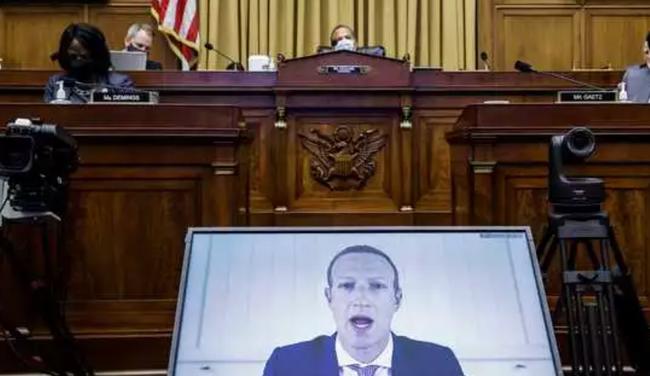
Senate Orders Big Tech CEOs To Testify On "Liability Shield" Before Election Day Tyler Durden Thu, 10/01/2020 - 10:21 The Senate Commerce Committee has just voted to subpoena a group of Big Tech CEOs to appear for another round of Congressional testimony, possibly before Election Day. But while the most recent 'Big Tech' hearing back in July, which compelled the CEOs of Apple, Facebook, Alphabet and Amazon - including Jeff Bezos and Mark Zuckerberg - was held by the House and organized to discuss anti-trust issues pertaining to the Silicon Valley giants, it looks like the GOP-controlled Senate is going to investigate - what else? - anti-conservative bias on the biggest' social media platforms, as the subpeona targeted the CEOs of Twitter, Facebook and Google-owner Alphabet. Specifically, the CEOs will be called upon to discuss Section 230 of the Communications Decency Act of 1996, which is typically referred to as the tech platform "shield law", or "the 26 words that created the Internet". In essence, the law gives companies like Facebook immunity for anything posted on its platform, from political opinions to live feeds of mass shootings. Both President Trump and Joe Biden have called for amending Section 230, though the two have different reasons for doing so. Trump has filed an executive order laying out the administration's line of attack on Section 230, though the "liability shield" for social media platforms remains intact - at least for now.
http://dlvr.it/Rhl5yB

Stocks Knocked After Pelosi 'Very Skeptical About Deal'

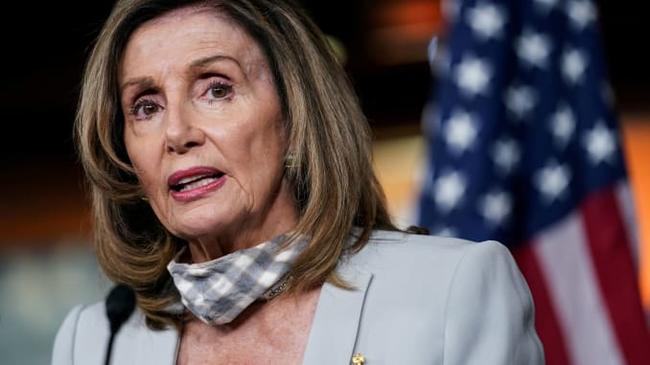
Stocks Knocked After Pelosi 'Very Skeptical About Deal' Tyler Durden Thu, 10/01/2020 - 09:54 Nancy Pelosi on Thursday said she's 'VERY skeptical about a deal' over the next round of pandemic stimulus, following Wednesday discussions with Treasury Secretary Stephen Mnuchin. Speaking on a Democratic whip call, Pelosi said Republicans and Democrats 'don't share the same values,' citing the child income tax credit, and that Democrats 'have gone down significantly' in their demands, while Republicans 'are at 0,' according to Politico's Jake Sherman. PELOSI gave several examples on the private Democratic call about how far Rs and Ds are apart: She said that Republicans refuse to peel back a biz tax credit, and, at the same time, won’t do anything for children — referring to the tax credit. — Jake Sherman (@JakeSherman) October 1, 2020 Pelosi's comments jolted stocks downward in Thursday trading. 
http://dlvr.it/Rhkzwr

COVID-19 'Phase 3' Vaccine Trial Participants Report Day-Long Migraines, Fever 

COVID-19 'Phase 3' Vaccine Trial Participants Report Day-Long Migraines, Fever  Tyler Durden Thu, 10/01/2020 - 09:05 European press reports earlier indicated that the EU's pharma regulator is preparing to expedite approval of the AstraZeneca-Oxford vaccine, even as the FDA expands its investigation into the COVID-19 vaccine's Phase 3 trials (after a patient was reportedly seriously sickened in the UK, though AZ insists that illness had nothing to do with the trial). As the WHO, Bill Gates, Dr. Fauci and the global health-care establishment work with their allies in the press to try and convince as many people as possible to agree to take a COVID-19 vaccine once one is approved, more alarming reports are emerging in the mainstream press about issues with the 'Phase 3' trials. CNBC reported Thursday morning that several patients involved in trials involving Moderna's vaccine candidate and the Pfizer-BioNTech vaccine candidate have experienced serious side effects, including "shaking so hard he cracked a tooth after taking the second dose." As bad as they were, the symptoms typically dissipated within a day or two, and four out of the five subjects interviewed by CNBC said they felt the struggle was "worth it" to gain protection from COVID-19. Then again, the symptoms certaintly sound serious. Luke Hutchison woke up in the middle of the night with chills and a fever after taking the Covid-19 booster shot in Moderna’s vaccine trial. Another coronavirus vaccine trial participant, testing Pfizer’s candidate, similarly woke up with chills, shaking so hard he cracked a tooth after taking the second dose. High fever, body aches, bad headaches and exhaustion are just some of the symptoms five participants in two of the leading coronavirus vaccine trials say they felt after receiving the shots. In interviews, all five participants - three in Moderna’s study and two in Pfizer’s late-stage trials  - said they think the discomfort is worth it to protect themselves against the coronavirus. Four of them asked not to be identified, but CNBC reviewed documentation that verified their participation in the trials. While the symptoms were uncomfortable, and at times intense, they often went away after a day, sometimes sooner, according to three participants in the Moderna trial and one in Pfizer’s as well as a person close to another participant in Moderna’s trial. At least 41 vaccine candidates are in human trials worldwide, but only four US-backed candidates are in Phase 3: Moderna, Pfizer, AstraZeneca and Johnson & Johnson. At least one UK-backed vaccine is also entering Phase 3. While it’s possible some of the symptoms described could have been caused by an unrelated illness, Moderna and Pfizer previously said some participants in their phase one trials experienced mild symptoms. Pfizer emphasized that complications like this were only seen in a small number of cases. Luke Hutchison Hutchison, a computational biologist from Utah, shared his experience with CNBC: Hutchison, a 44-year-old computational biologist in Utah, said he signed up for Moderna’s phase three trial because he’s healthy, physically fit and a big believer in vaccines. He specifically wanted to support Moderna’s effort, as he was intrigued by the company’s RNA-based approach. While still experimental, mRNA vaccines potentially offer faster development and production times, which could be a major benefit during a global pandemic that has led to more than 1 million fatalities.  “I had a high degree of confidence it would work and I wanted to contribute to the solution,” Hutchinson said. After getting the first shot on Aug. 18, he said he felt a little under the weather for several days with a low-grade fever. He got his second shot at a clinic on Sept. 15. Eight hours later, he said he was bed bound with a fever of over 101, shakes, chills, a pounding headache and shortness of breath. He said the pain in his arm, where he received the shot, felt like a “goose egg on my shoulder.” He hardly slept that night, recording that his temperature was higher than 100 degrees for five hours. After 12 hours, Hutchison said he felt back to normal and his energy levels returned. Having signed a lengthy consent form, Hutchison was aware that he might experience symptoms. But he was still struck by the severity and duration, tweeting on Sept. 16 that he experienced “full on Covid-like symptoms.” Two other participants in the Moderna trial, who asked to remain confidential because they feared backlash from the companies, reported similar side effects. Likewise, one participant in the Pfizer trial said he experienced more severe symptoms than he expected. Another participant opined that Moderna may need to tell people to take a day off after their second dose. One North Carolina woman in the Moderna study who is in her 50s said she didn’t experience a fever but suffered a bad migraine that left her drained for a day and unable to focus. She said she woke up the next day feeling better after taking Excedrin, but added that Moderna may need to tell people to take a day off after a second dose. She said other people in the trial have joined a couple of private Facebook groups and have shared similar experiences. She said members of the groups also reported a fever and pain in the arm similar to getting a tetanus shot, adding “you’re not going to be lifting weights or working out." "If this proves to work, people are going to have to toughen up," she said. "The first dose is no big deal. And then the second dose will definitely put you down for the day for sure...You will need to take a day off after the second dose." Moderna and Pfizer responded by noting that some vaccines are harder on the body than others, and that the negative reactions in a minority of patients were an unfortunate trade off, but not reason enough to forego taking the vaccine. Moderna and Pfizer have acknowledged that their vaccines could induce side effects that are similar to symptoms associated with mild Covid-19, such as muscle pain, chills and headache. As companies progressed through clinical trials, several vaccine makers abandoned their highest doses following reports of more severe reactions. Infectious disease specialist Florian Krammer of New York’s Mount Sinai said on Twitter that the side effects reported in Moderna’s phase one trial are “unpleasant but not dangerous.” It remains to be seen whether kids and pregnant women will experience similar symptoms. We wonder how heavily testimony like this will figure into the FDA's expedited ruling on whether to grant emergency approval to both these companies.
http://dlvr.it/RhkplH

Losing The Plot...?

Losing The Plot...? Tyler Durden Thu, 10/01/2020 - 08:28 Authored by Bill Blain via MorningPorridge.com, "You don’t waste October sunshine...” Two topics this morning. The Outlook for Q4 and The Pandemic.  Let’s start with Q4.  Starts today.. Get set, ready, go! As we enter the final quarter of this incredible year, stock markets are wobbly but remain close to record levels, bond markets have staged record issuance, and yields have never been so low. Yet London’s City is empty, activity is crashing once more, millions face unemployment as second lockdowns bite across the land!  The good news is there will be no Christmas to distract us from the vitally important business of flustering and flaffing about markets. Bah Humbug rules will apply this year.  There will be no New Year either – which means we shall be trapped in perpetuity in the misery that was 2020… Argg…. October is always a fascinating month. It’s not just leaves falling off trees, but the occasional banker jumping out of high windows as the seasonal autumn market crash comes around. Can the gains seen since March be maintained? Or will it all come crashing down on a Manic Monday, Black Tuesday, Woeful Wednesday, Terror Thursday or any normal Friday?   I suspect markets remain flat for the time being. Probably. Maybe. Central banks have little choice but to continue juicing markets through zero rates and QE Infinity. When returns are so low, investors have little choice but to keep taking risk – meaning equity markets are likely to benefit. But it’s getting increasingly selective out there. Even a broadly positive fundamental-led market doesn’t mean bubbles aren’t ripe for popping.  The shape of the global economy remains troubling – China would like us to think their domestic economy is resurgent, but oil and commodities remain weak, while job losses across Occidental economies are rising. Few folk are talking about synchronous recovery in 2021. Markets are rightly nervous. The key influence this month will be the US election and stimulus hiatus. At present we’re waiting to see if and when the US government gets around to pumping in some fresh stimulus to boost markets higher. Although there is much talk and stimulus posturing – but it’s unlikely in the current fervid US environment. Fears about how good or bad a Democrat or Republican leader will or won’t be for the economy are not as forceful short-term factors as a new dose of stimulus could provide – but in a market desperately seeking direction and nudge, any Political noise is likely to trigger volatility ructions – especially if the market takes a tantrum on the lack of stimulus package.  The other big issue remains the Pandemic. Markets are being driven by the implications of lockdowns on recession and consideration of the K-shaped recovery – whereby the rich with access to capital get richer and the rest of sink further into penury. That’s not an entirely encouraging perspective for the long-term future of QE interventions and social cohesion as Europe enters its next election cycle.  What will markets do? Has the rally run of out steam? Are we in a flat market till a new US administration sets the narrative in Jan?  Its flat markets that can be most dangerous – that’s when suddenly confidence snaps and we get the big tumbles. Will it happen? Watch this space. Meanwhile… What’s the real story about the Virus? I am always amused by ridiculous conspiracy theories telling us the world is in the grip of a small number of billionaires with hidden agendas and designs to reset a new world order.. You can understand why weak and feeble minds are drawn to them… But I am increasingly wondering what we aren’t being told about the virus. Y’day Boris warned us of further restrictions to come – the virus is “not-under-control” wail his scientists. He went all Churchillian and said he is “not afraid” to put measures “more costly than the ones in effect now” to stem the virus. He tells us that we (the great British public) don’t want to “throw in the sponge” when it comes to fighting the virus. Actually.. many of us do want to stop. We want back to normal. Government, and the Media (which is luxuriating in 24 hour wall-to-wall horror coverage of the pandemic) are just too invested in the crisis to let it take its course.  What is it Boris thinks we are fighting? The virus is not the Black Death, and it isn’t even the much feared Epidemic we’ve been fearing for decades. Nor is it a simple flu – it’s clearly more complex in the way it attacks the body. But it does exactly what the regular yearly flu does – predates the elderly and sick in our population. Sad but that’s life (actually, death..)  What has been achieved locking down commerce and taking massive, potentially terminal, risks with the economic health of the nation? There is a simple cost-benefit to lockdown vs saving lives. At the moment, based on the data, it makes little sense.  Let’s consider the facts about Coronavirus here in the UK.  The following numbers are all from official statistics taken the NHS website collating all data on English deaths due to Covid.  NHS England official data shows the following: * 21 people under 20 have died. 4 of them did not have an indentified pre-condition.  * 217 people aged between 20 and 40 have died of Covid. 35 of them had no pre-existing conditions.   * 2312 people between 40-60 have died. 270 had no pre-existing conditions.  * 11343 people under 80 have died. 577 had no pre-existing conditions. * 15431 people over 80 have died. 514 had no pre-existing conditions.  * Patients with Chromic Pulmonary Disease, Respitory, and Heart Disease figure in 48% of Covid deaths. Dementia is listed in 26% of Covid deaths.  * Obesity is not recorded as a pre-existing conditions, but it is known to increase the risk to people with Covid. Earlier in the pandemic it was suggested ethnic minorities were also more at risk, but the numbers show 15% of deaths are from minorities which is close to their 14% representation in the population.   * There is data on hospitals – but it is only updated monthly. The last snapshot from the beginning of September shows there are over 110,000 hospital beds in England. 468 were occupied by Covid Patients. Its been largely that way since June. Things have changed since then though.  * Over the last 20 years deaths in the UK have ranged between 550k to 620K. Flu accounts for around 30k deaths in a normal year, dwarfed by Cancers, Dementia and Heart Disease.  All the above are facts. If the facts change as we learn more then we can reassess new facts as they emerge.  Now for some opinion:  As I observed a few weeks ago the UK ran a successful campaign to reduce heart-attacks from 2000 only to see dementia deaths rise by roughly the same amount. The reality is we are all going to die. (Having suffered a massive sudden heart-attack after a botched operation I know they are painful, scary and nasty, but, for choice, I’d rather go quick than slowly losing it.) * Flu deaths thru 2020-21 are likely to be lower because of Covid has already removed a large part of its target cohort. The me is true for all other major causes of death.  * We know who the vulnerable are. Protect them – shielding if necessary. We know who is less vulnerable – let them get on with life and chose their risk. * We don’t yet know how deaths from foregone medical treatments, increased mental illness, loneliness, despair and suicide will rise. We know the impact of lost jobs and income is going to be felt most heavily among lower paid workers likely to cause long-term social deprivation issues. The young will suffer most to save the elderly. Having looked at the data above, the obvious conclusion is the risks are not dissimilar to a bad flu year. My question is what Facts and “Science” has Boris used to determine he is justified in wrecking the nation’s economy? Continued lockdown flies in the face of the data or cost/benefit.  Life is about compromise. You try to get the best out of it – despite the hurdles it throws our way in terms of health, wealth and petty bureaucracy. It’s a constant process of weighing up risks and making choices accordingly.  On balance locking down our economy to protect the elderly sounds like a courageous decision. But it’s not a good decision under any form of analysis. It does not make any economic sense. It’s not callous to suggest we have to acknowledge Covid-19 is a bad break? I am pretty sure my Dad would be furious if he’d lived to see his grand-kids’ futures compromised to give him a few extra months/years. He’d be livid.  My conclusion is Government is now so lost, stumbling and trapped in its own narrative because it committed and went all-on on lockdown/shutdown and “saving the NHS” by scaring the pants off the population so comprehensively that now it can’t face the consequences of what its already done… Boris will no doubt tell us he destroyed the economy to save us all. The only hope for the Tories will be to dump him. With prejudice.   Compare and contrast Sweden and UK. 
http://dlvr.it/Rhkj7B